Three tools I made
I needed a new music player and a way to visualize what my stamp prints would look like. My mom needed a searchable record for her recipe alterations.
Autonomous Sorting Robot
An Arduino-based robot that autonomously finds, captures, and sorts subjects into their correct rooms. Worked in a team of four over 14 weeks.
Finished in second place of the competition.
See documentation
Documentation
video of the robot in action · process notes
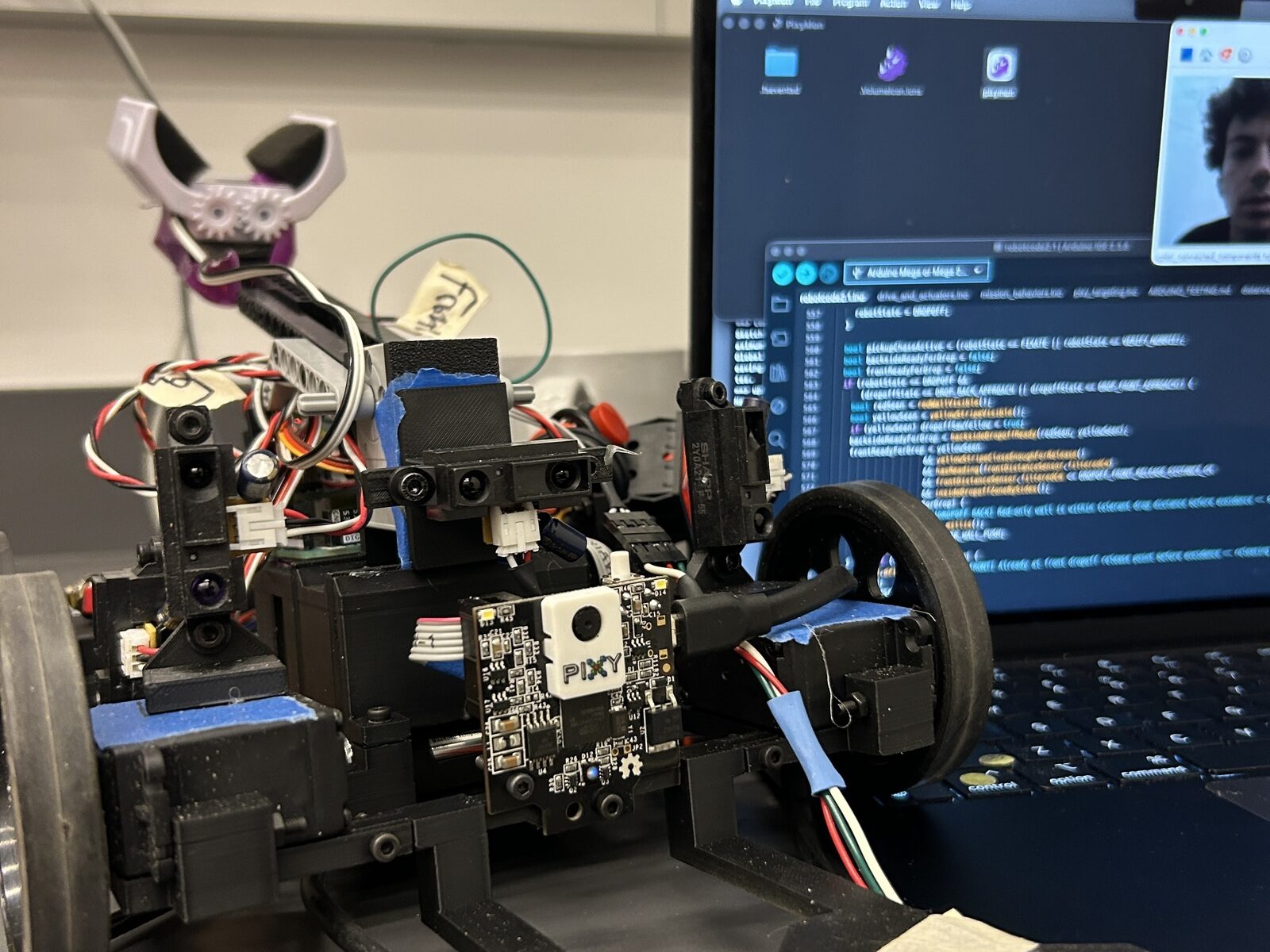
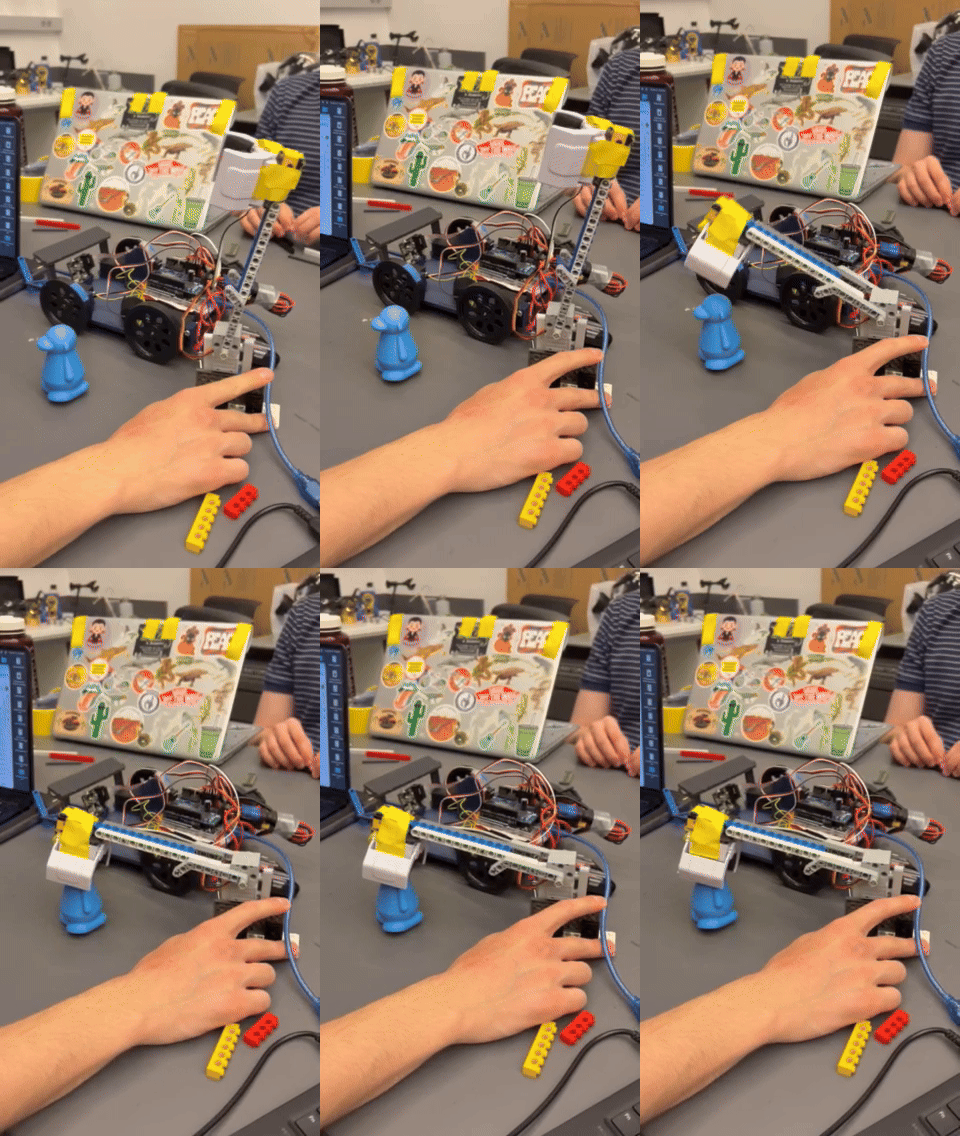
The task: design and build a robot that can autonomously find, capture, and transport subjects to their correct rooms without touching the controls. Our robot used an Arduino MEGA, a Pixy2 camera for visual detection, a 3D-printed chassis, and a LEGO Technic claw arm.
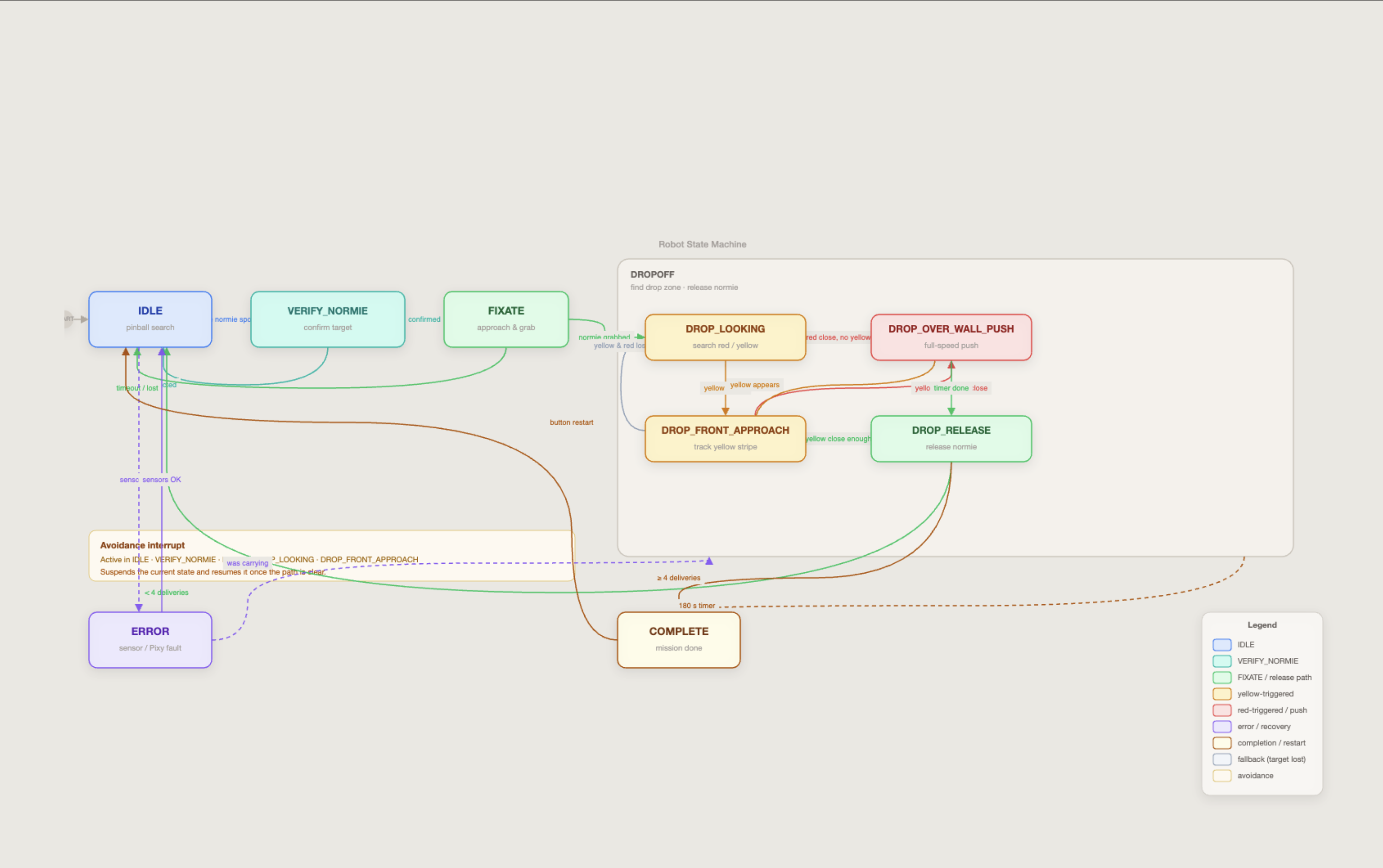
My primary contributions were communicating between the codebase and the non-technical teammates and structuring the state machine.
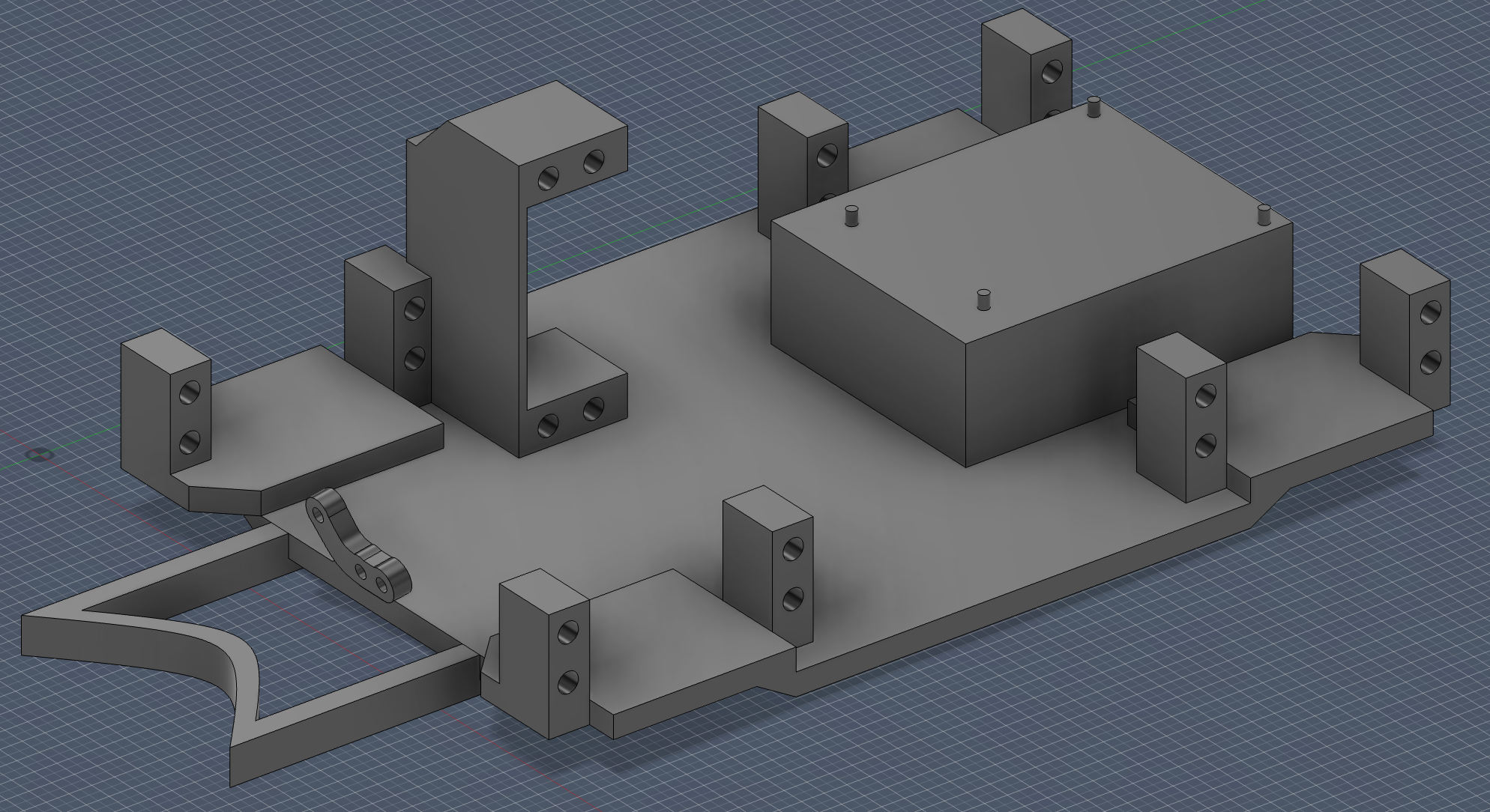
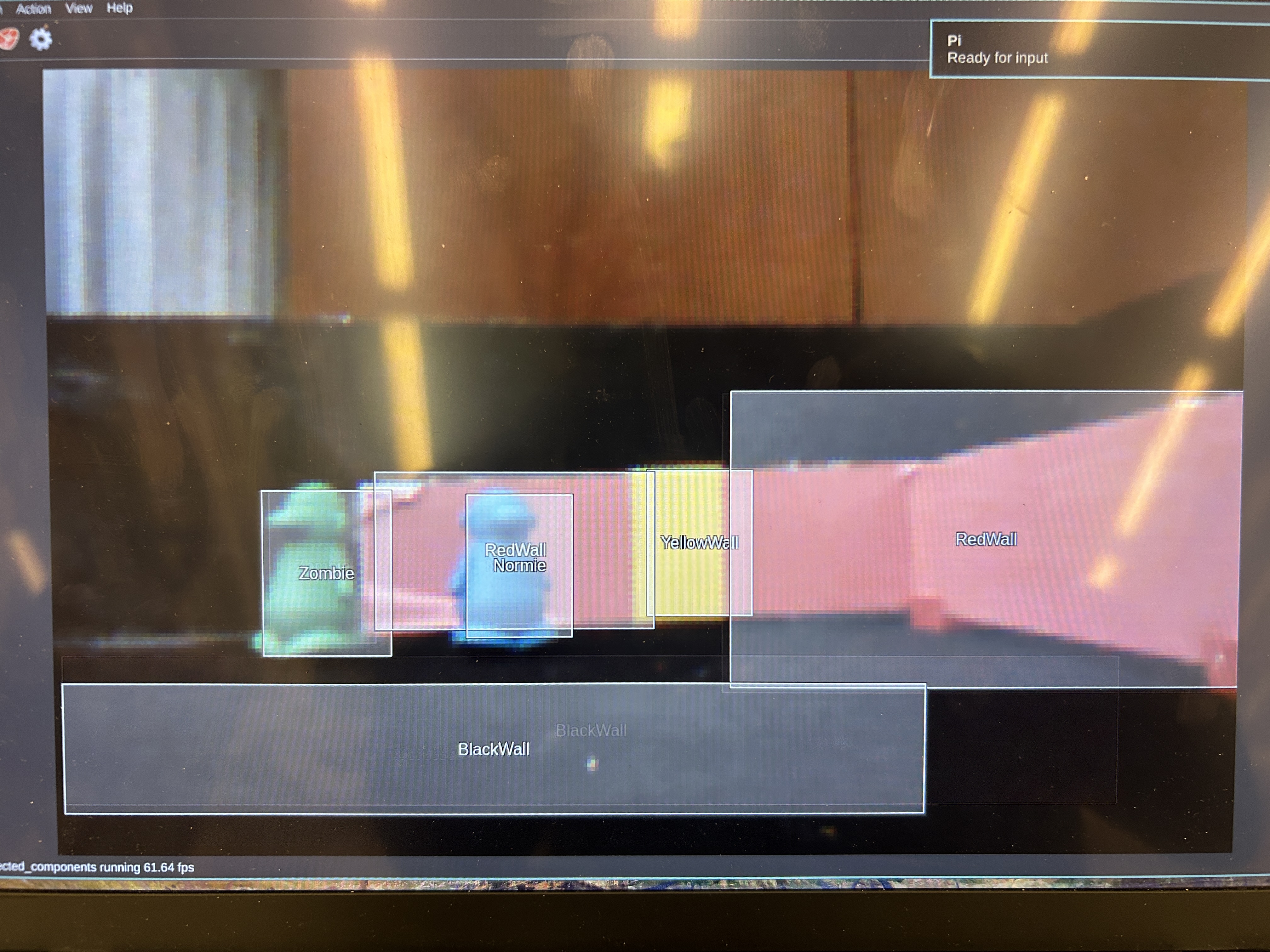
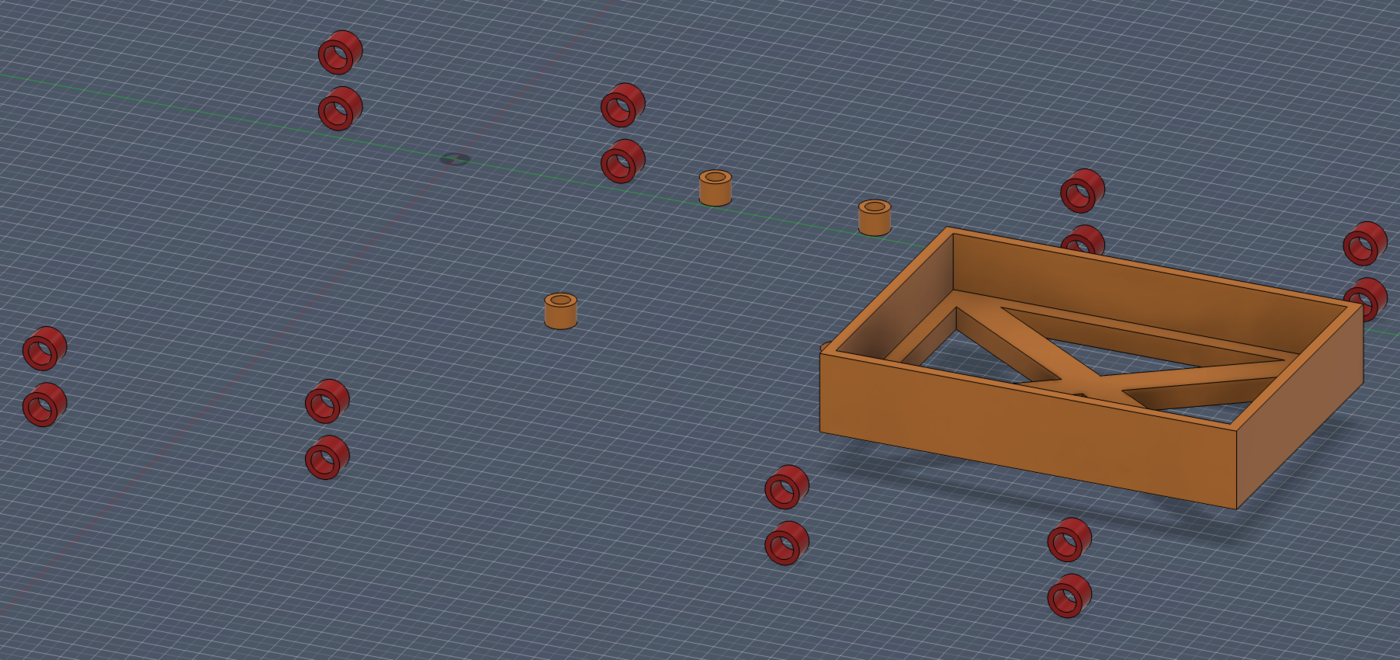
map() function and it fixed everything instantly. Also calibrated exact stop values per motor so the robot could stop without detaching servos.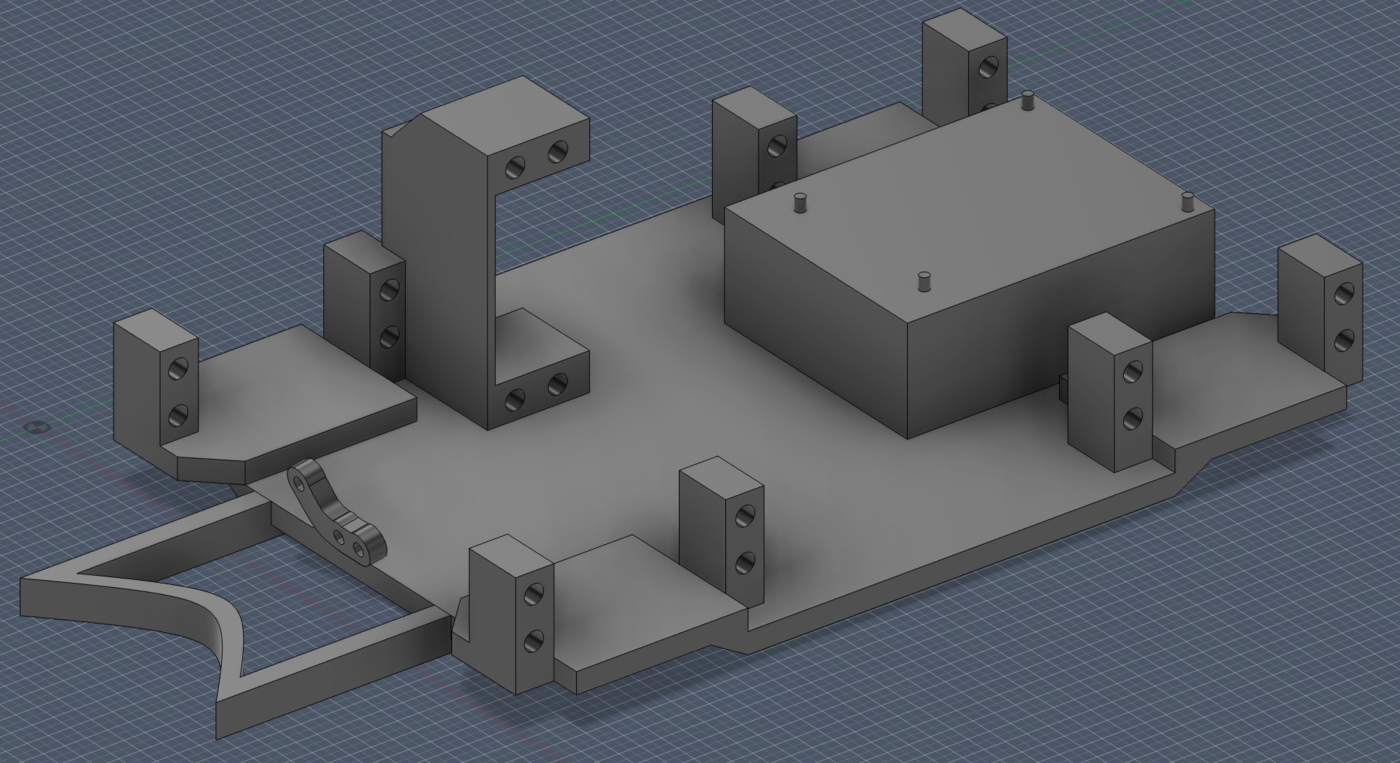
Carved Wooden Stamp and Embossed Print
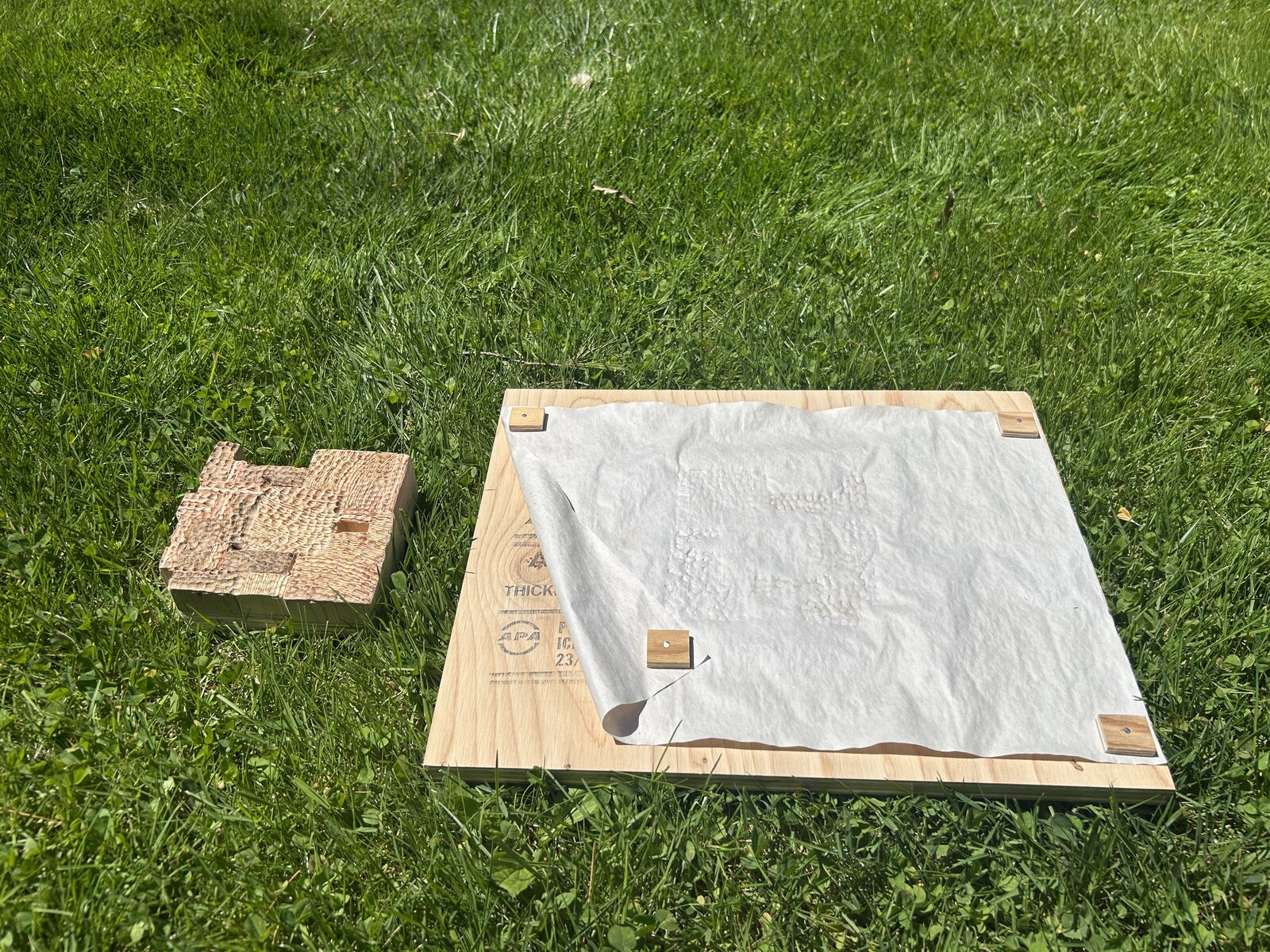
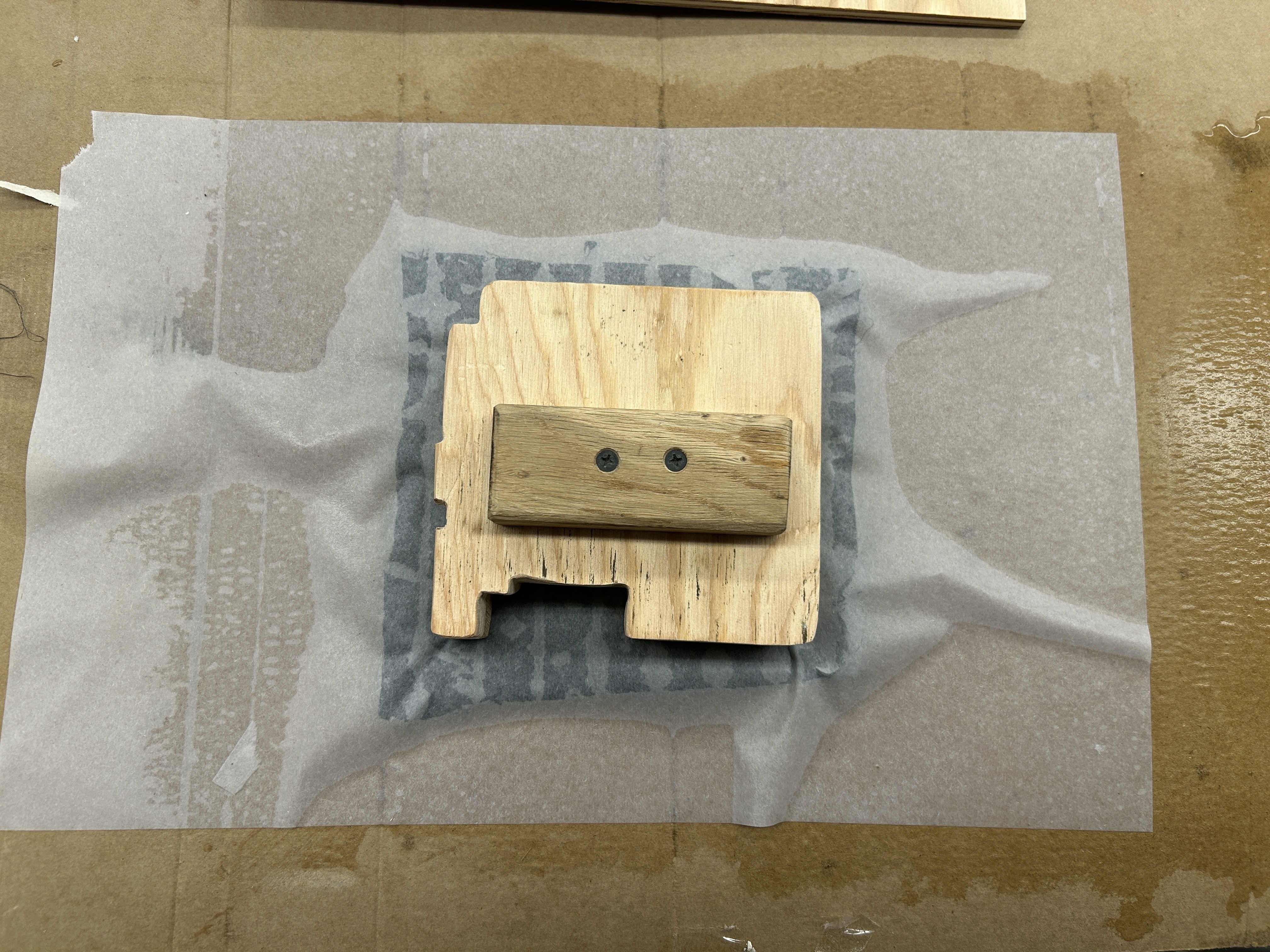
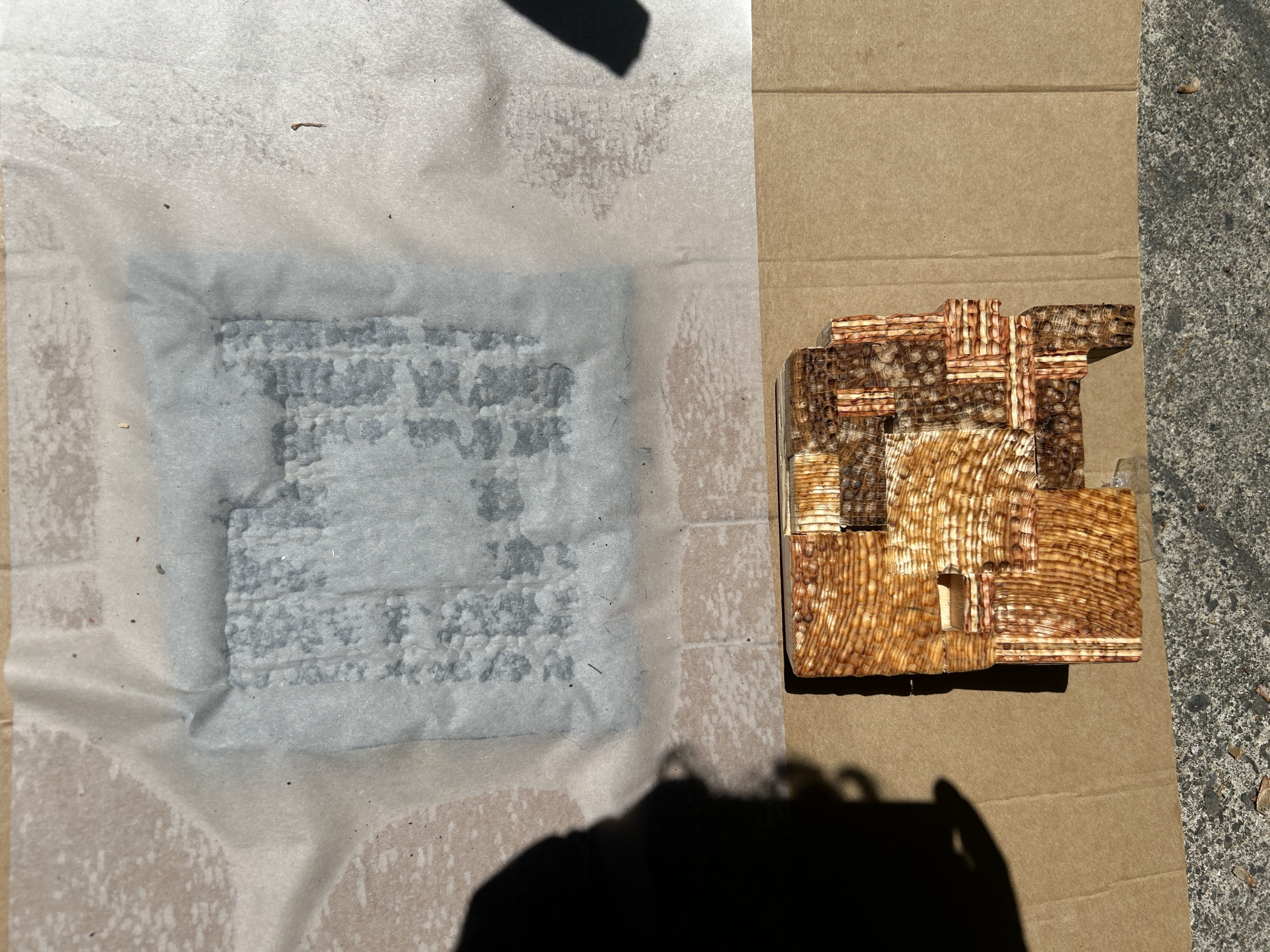
A stamp and embossed print for a visual ethnography class, exploring how materials transform information.
See documentation
Documentation
artist statement · process photos
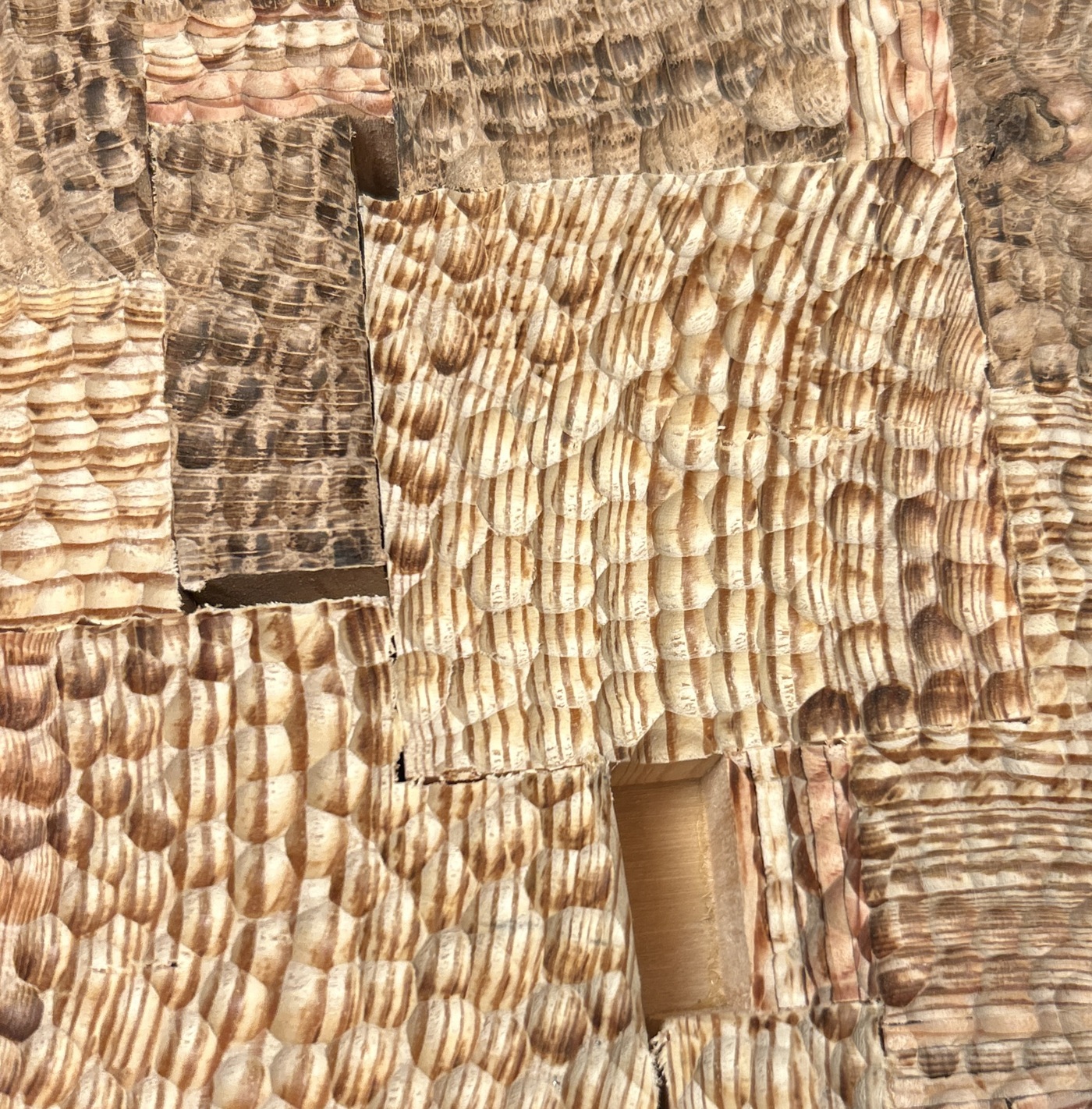
Plywood is not a homogenous material, it's a mixture of air, glue, and wood. Thin veneers are pressed together in alternating grain direction. The veneers are thin sheets shaved off a rotating log. The process transforms concentric growth rings into two-dimensional patterns across the boards' surface. Growth rings are a record of seasonal change: the denser, darker wood is where growth was slowest.
My thesis argued that there is no perfect mediation, all communication is lossy. All we can do is see where the loss occurred and consider how it structures the messages we send. I wanted to make a sculpture committed to that idea.
The piece is a stamp, made of plywood, and a mounted embossed print. I glued blocks of wood to a baseboard, carved craters into the surface, and pressed it on wetted semi-transparent paper. The paper picked up color from the wood, compressed in places, tore where pressure exceeded its strength. The grain from the stamp was not transferred, but in its place, the grain from the plywood board it is mounted on shines through the paper.
Sculpture II, Spring '26
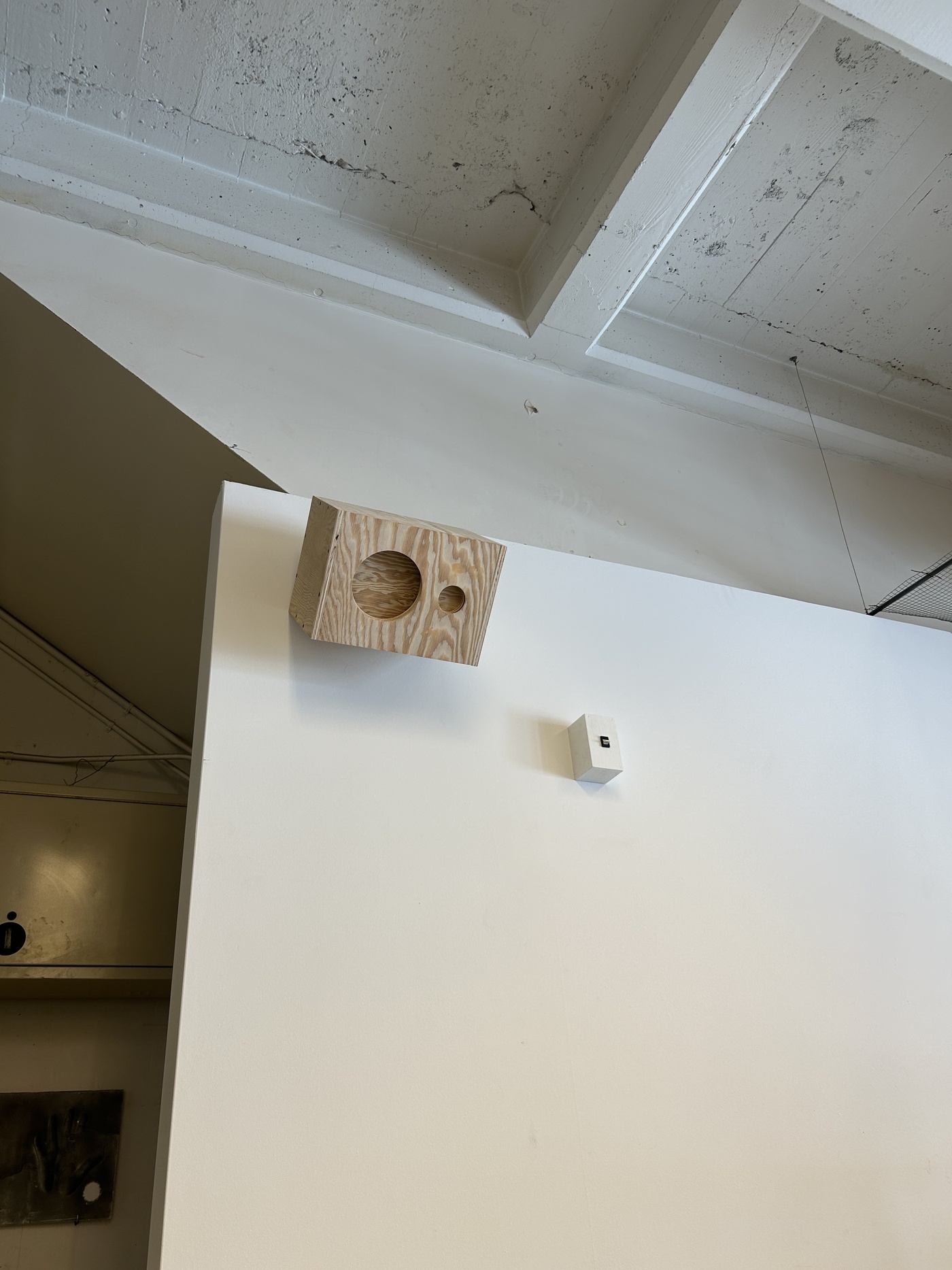
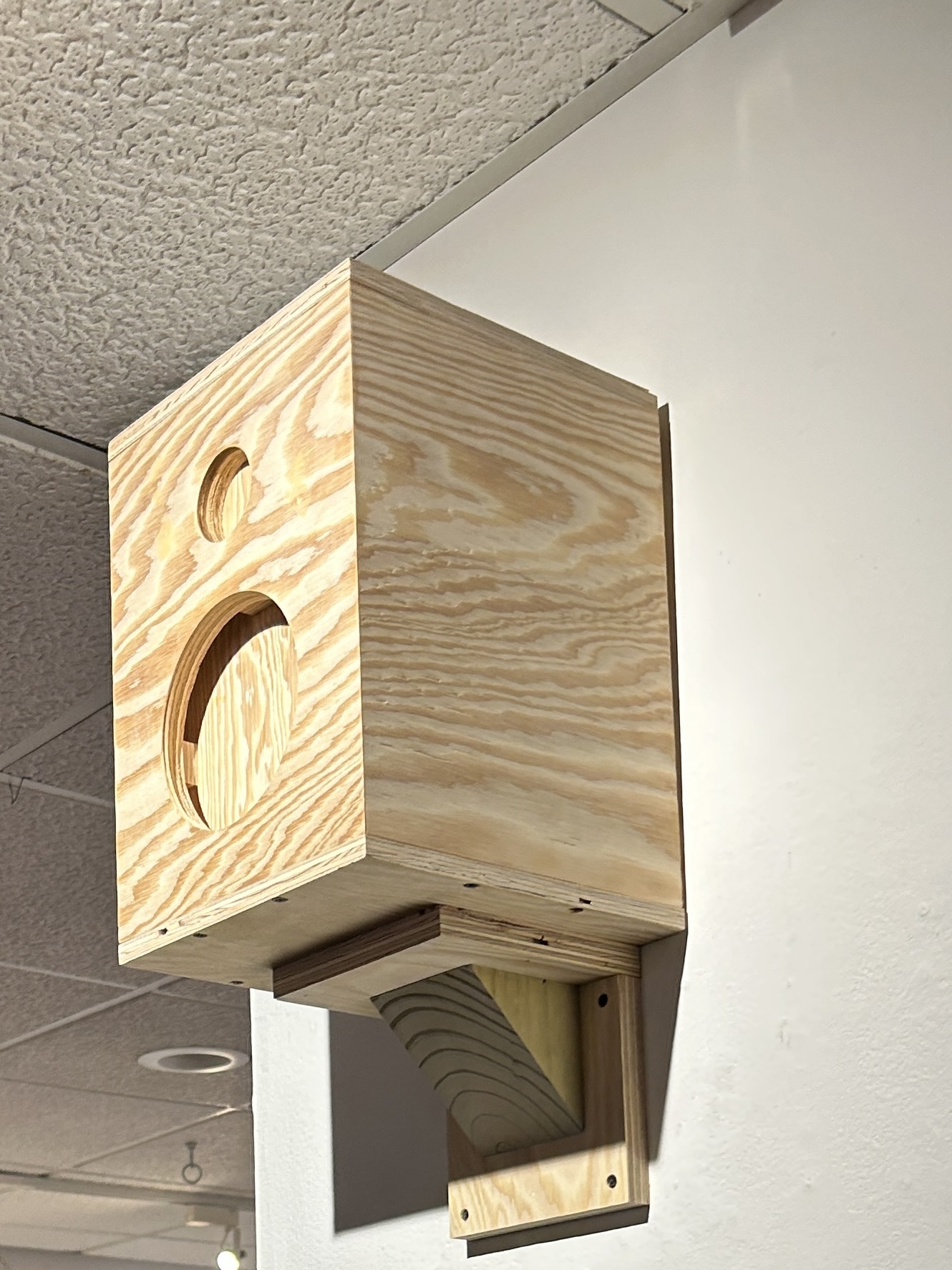
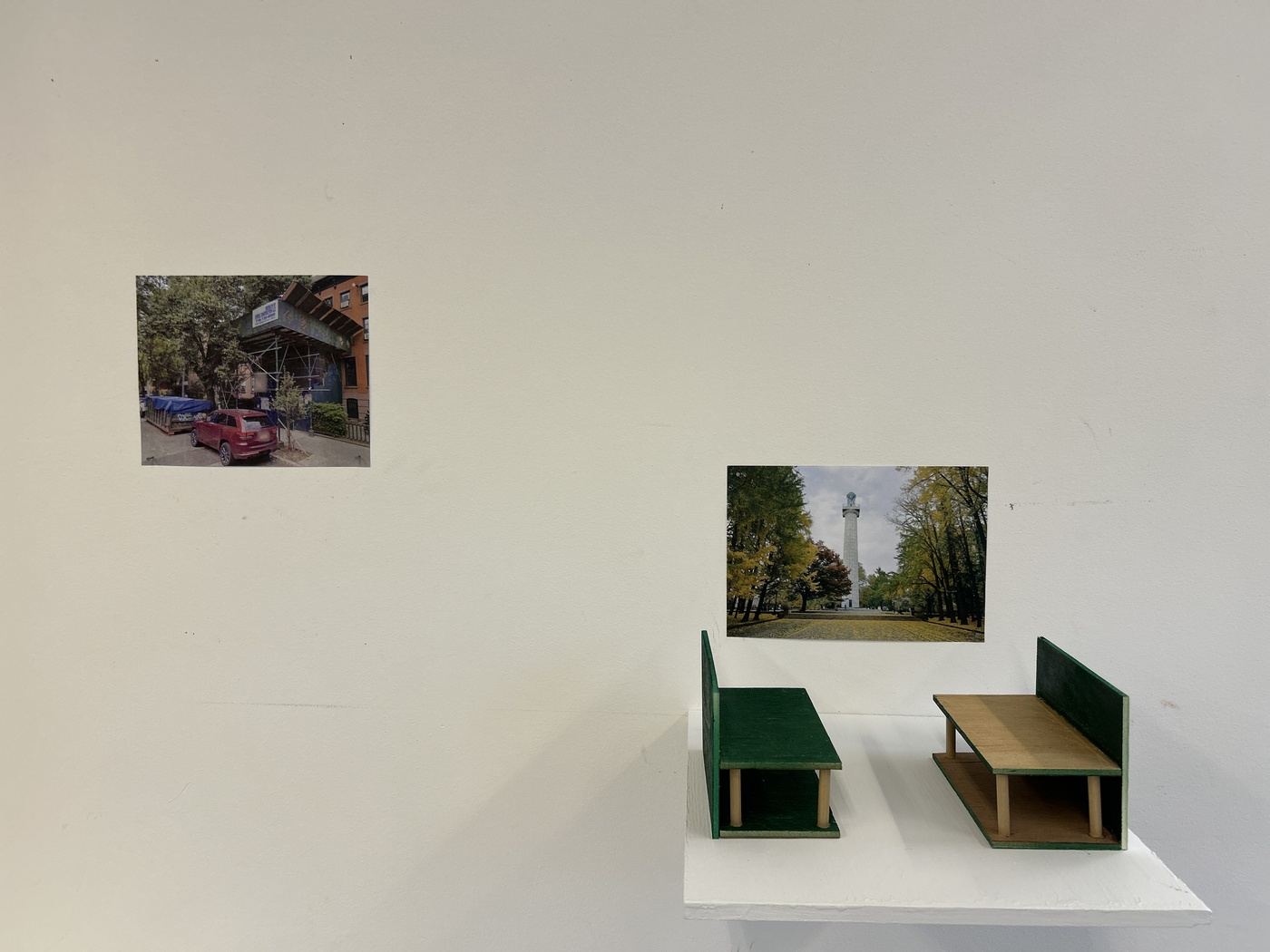
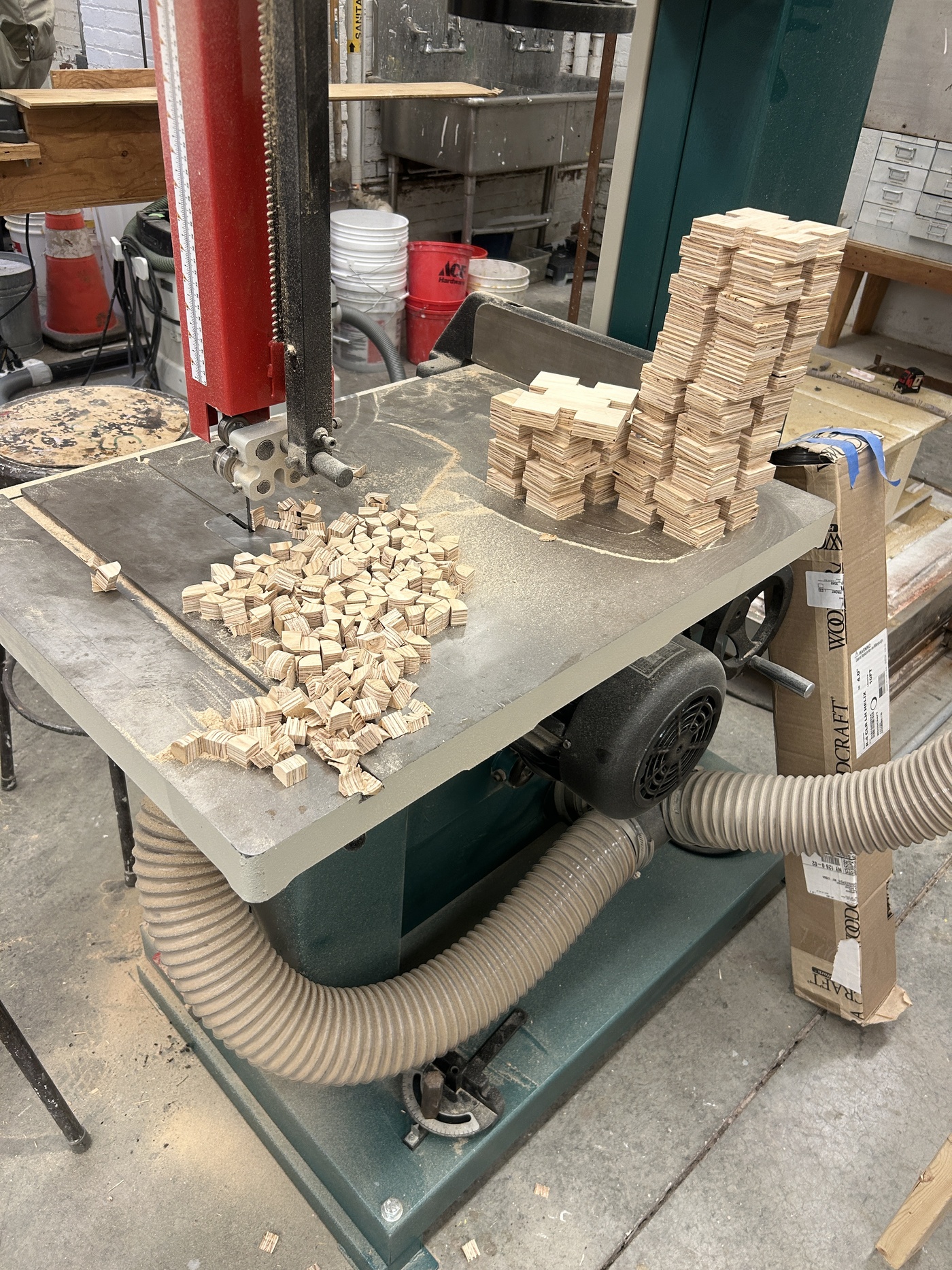
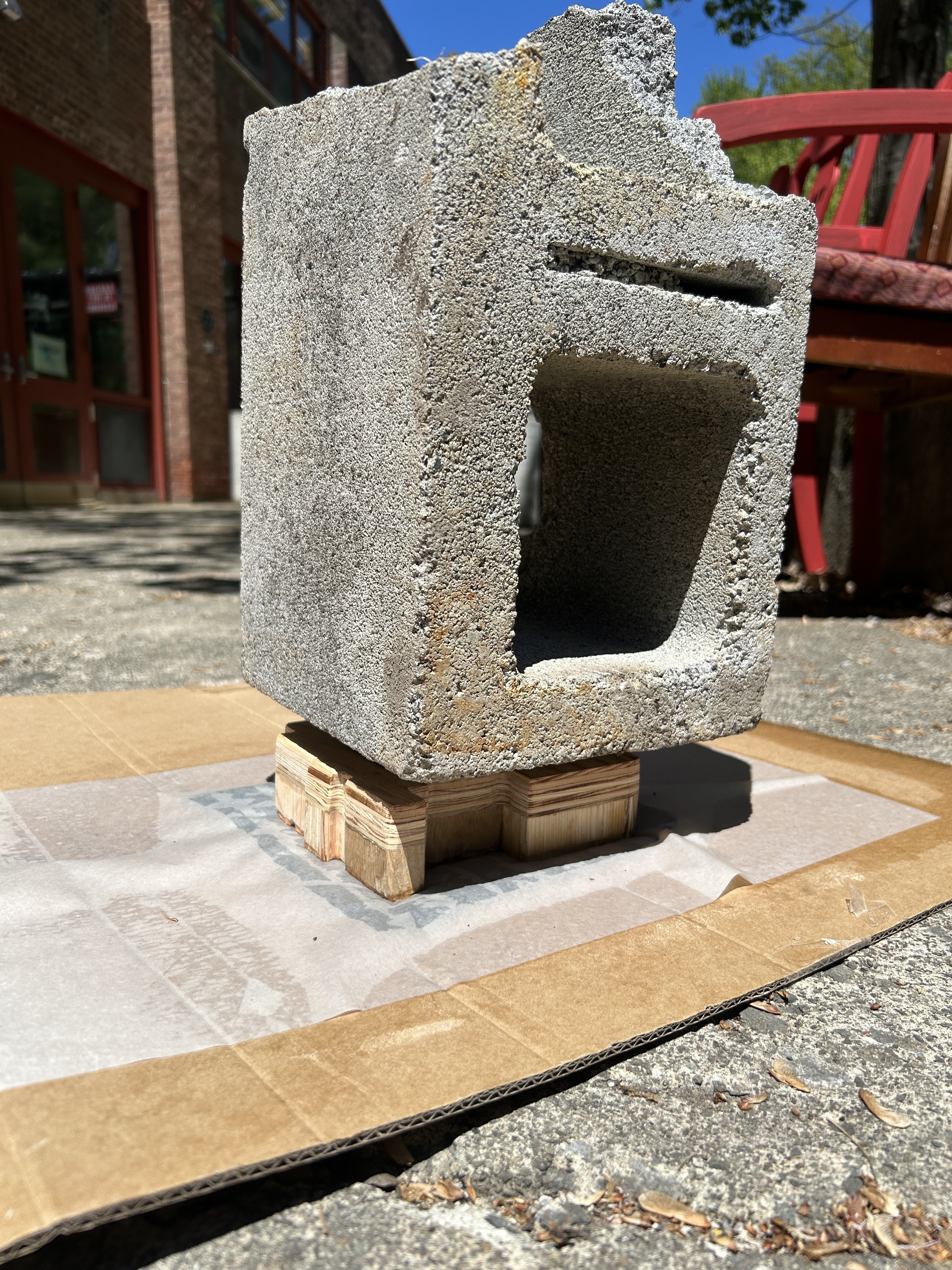
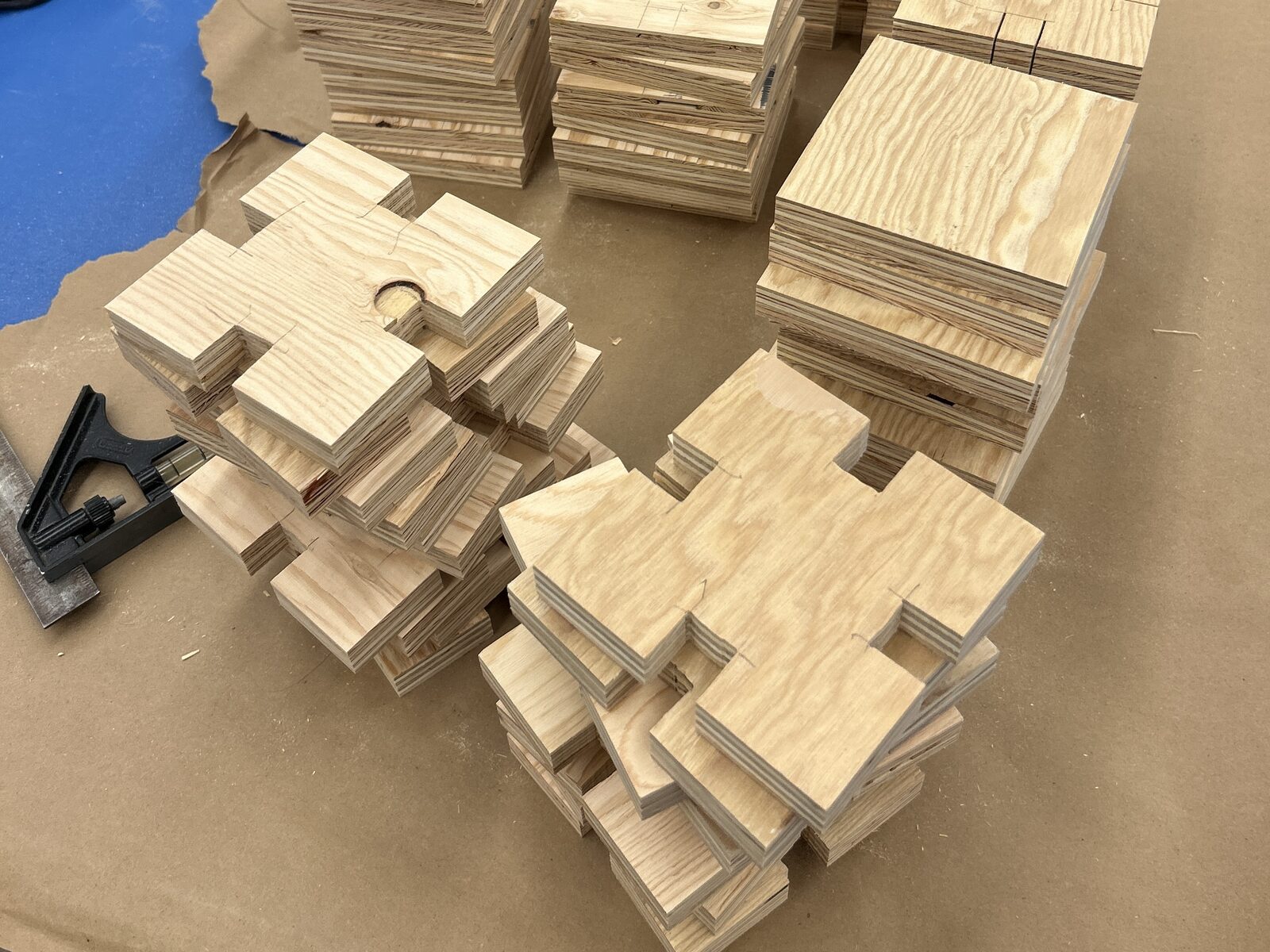
Four studio projects exploring what objects do when they stop working the way they're supposed to.
See documentation
Documentation
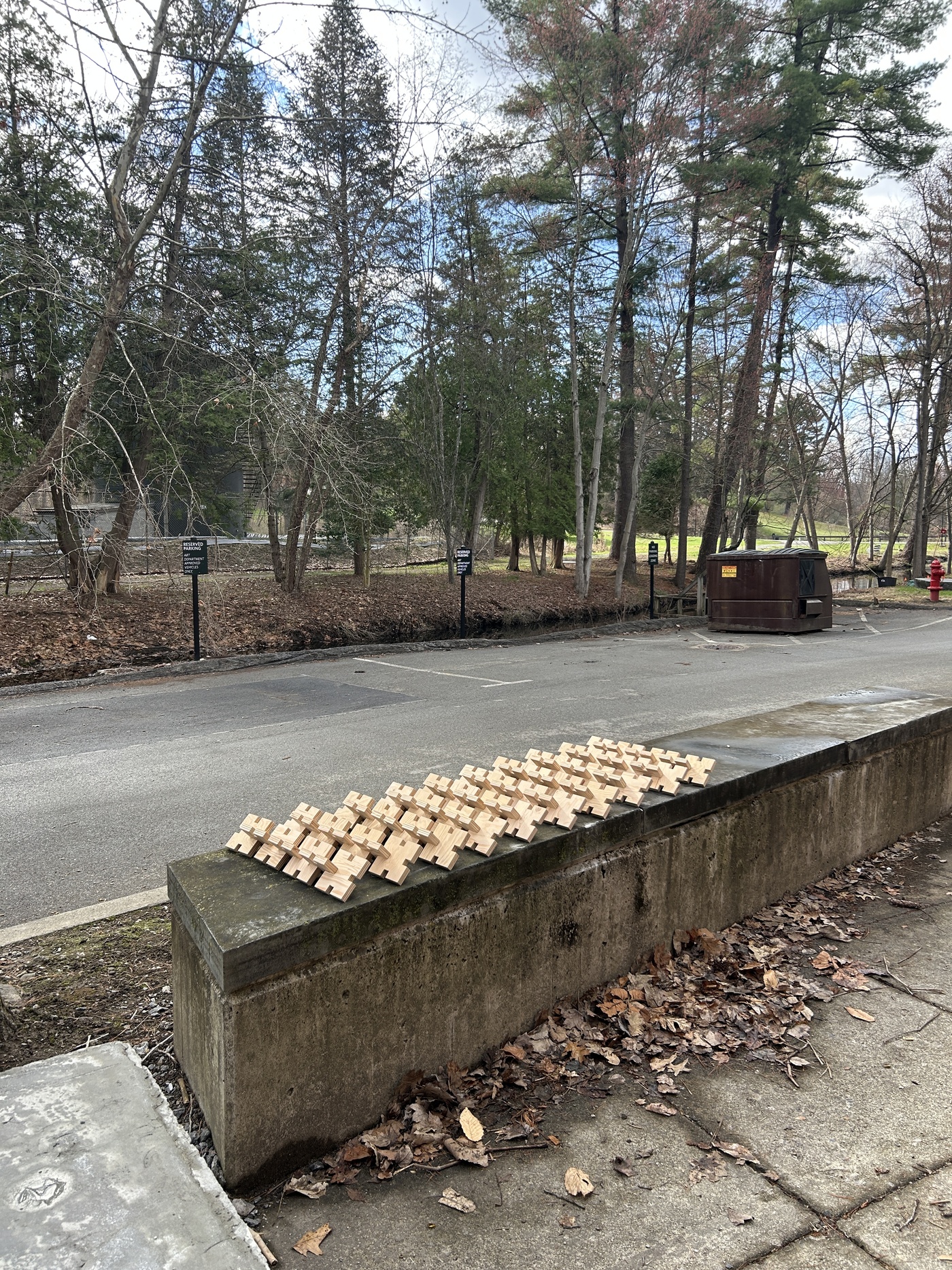
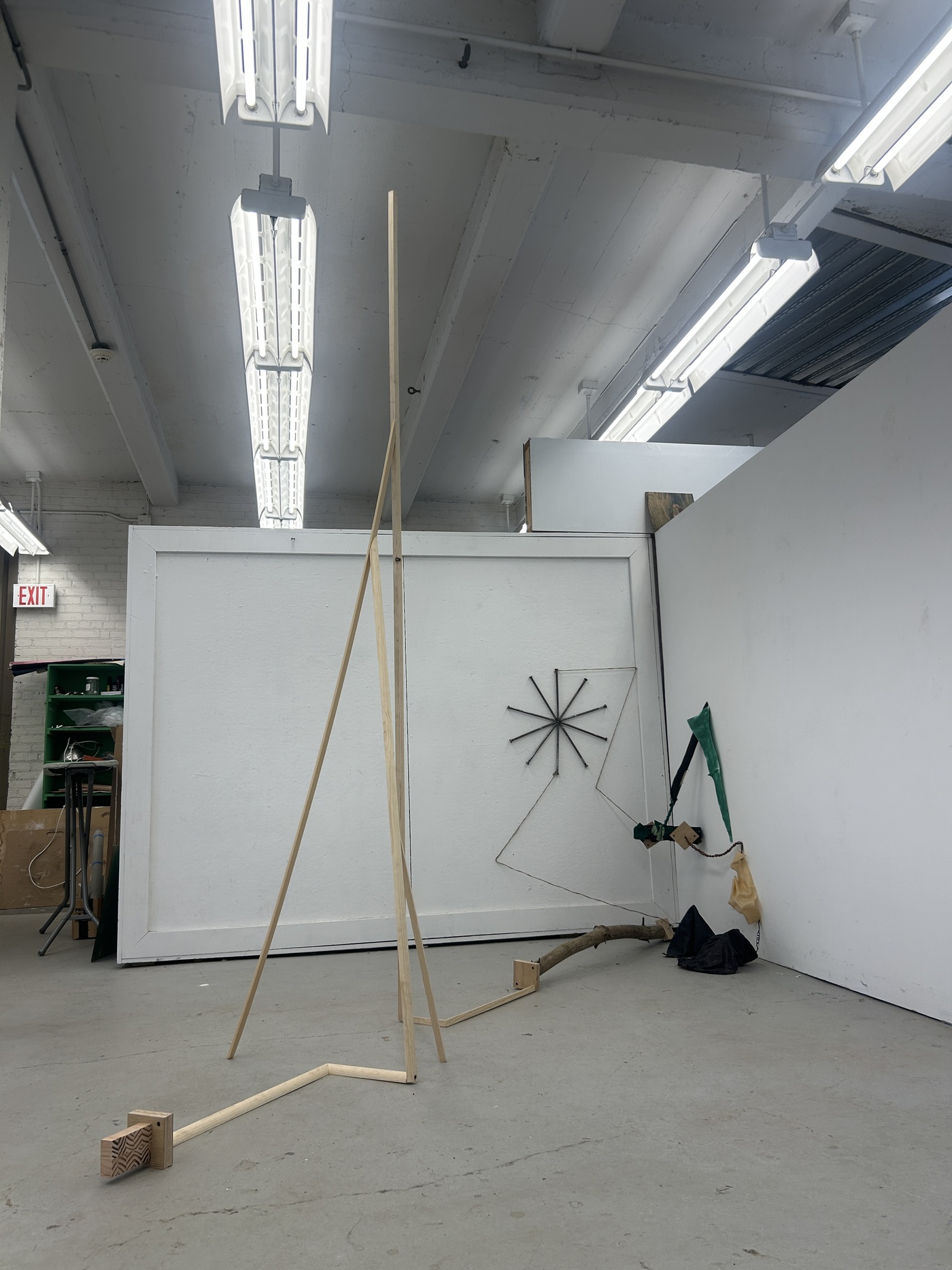
four projects: speakers · benches · blocks · exquisite corpse
The work I made for this class kept returning to the same few questions: what does an object do when it can't do its job? What are the rules that allow people to exist in the same space? What can we learn from the difference between what I intended and what a viewer can actually see?